We all know what a brief is. But not all briefs are created equal.
There are the highly detailed ones, packed with constraints, guidelines, and specific requirements. The kind that, once you read them, make you think, “Got it,” and are practically self-explanatory, often in just five minutes.
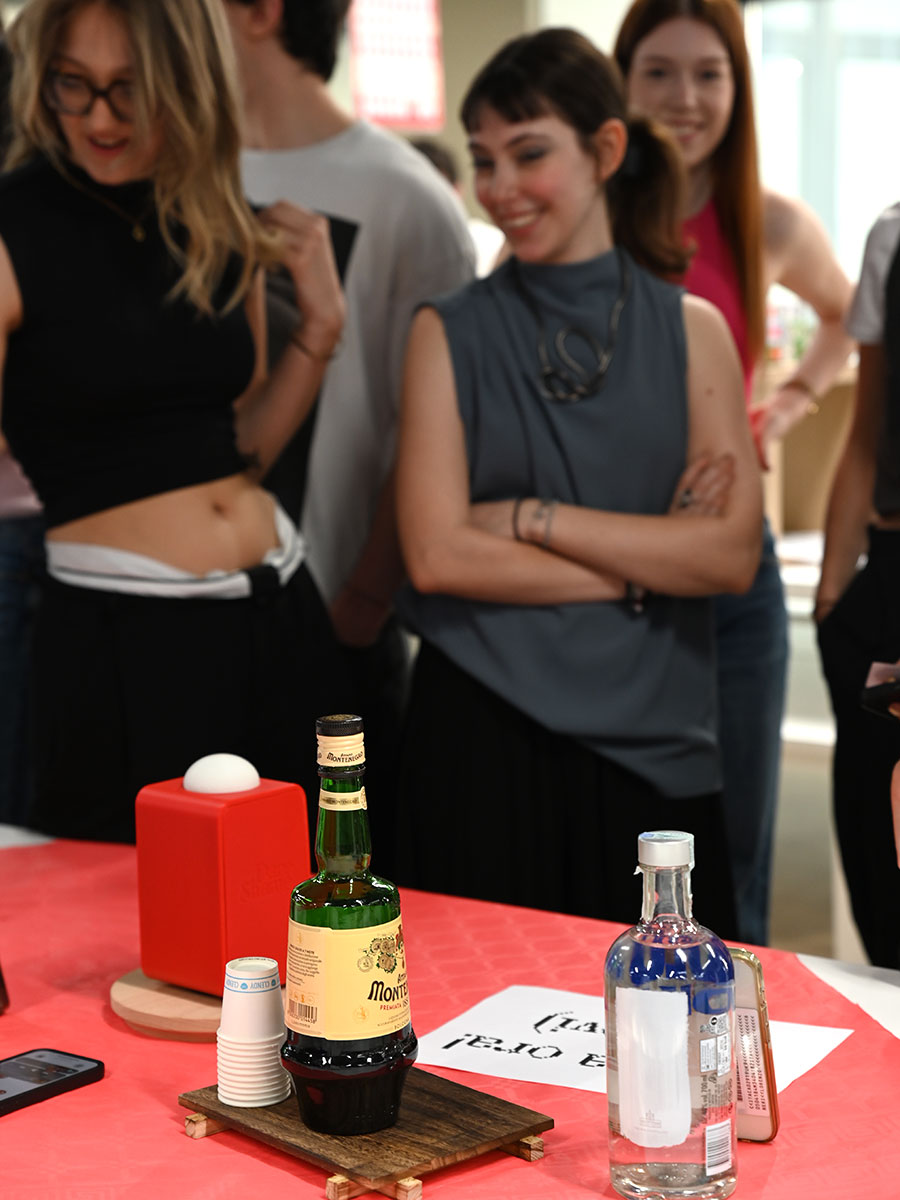
And then there are open briefs—the ones that don’t tell you exactly what to do, but instead ask you to let go. From a brief like this, practically anything can emerge: ideas, doubts, anxieties, relationships, technology, strange objects, apps, rituals, identities, everyday life, and, why not, even a bottle of Montenegro. And that is exactly where the fun begins.
During our Multimedia Design course at the Scuola Italiana Design (SID), we challenge our second-year students with a project that lasts about five months: to conceive and design a physical object with a digital extension.
The 2026 brief asked them to explore new paradigms in our relationship with ourselves and others, translating themes like identity, relationships, well-being, and social life into physical and digital experiences.
In simpler terms:
Design something that speaks to how we feel, how we interact, how we express ourselves, and how we take care of ourselves and others.
The only constraint: use irony—nothing boring.
Working with such an open brief is wonderful (in our opinion), but it’s also very uncomfortable because there is no predefined product category, no clear path to follow, and no easy benchmark to copy and paste. Everything is possible and designable.
For second-year design students, this freedom is both incredibly powerful and complicated: on one hand, there is absolute freedom, which allows them to imagine a product, a service, an interface, a ritual, an experience, or a strange object that didn't exist before. On the other hand, there is panic (lots of panic) and the classic question: "Okay, so what are we actually supposed to do?"
And it is exactly from this question that the project begins: not when the brilliant idea strikes, not when you start working in Figma, and not when you create a cool render. The project starts much earlier, right when you try to give shape to something that isn't clear yet, when you learn to sit with ambiguity without immediately looking for the easiest shortcut.
Because design also means this: navigating through an initial fog, finding a direction, taking a few detours, and, step by step, finding a way out to arrive somewhere.
Maybe not the place you imagined at the start, but an interesting place nonetheless.
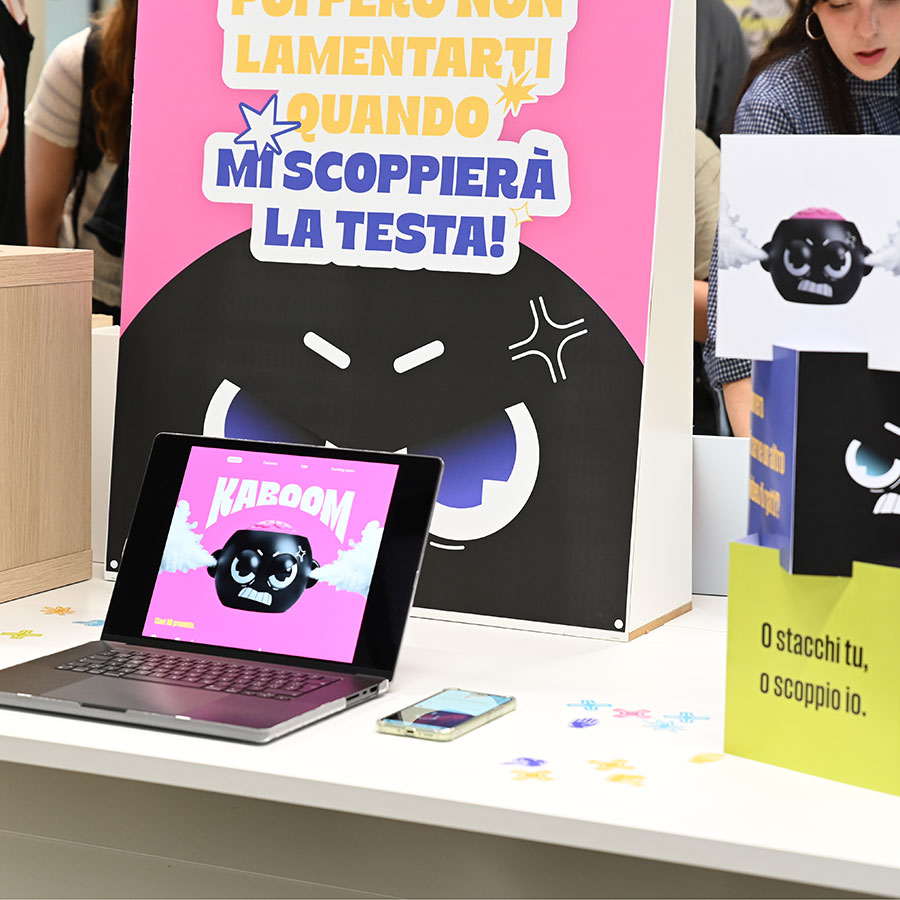
During the course, students work in groups of four or five on a system composed of multiple elements: a concept, a physical object, a digital component, a narrative, a landing page, an app prototype, a visual identity, and all those details that make a project feel alive.
Our teaching approach is based on requiring many outputs and defining the phases and timelines for project development (research, problem definition, ideation, concept development, prototyping, storytelling, and presentation).
Everything else is in the hands and sensitivity of the students.
Creative freedom allows each group to take a completely different path from the others in terms of themes, product types, and languages. This is how alternative, provocative, and sometimes surprising or unsettling objects are born—objects that challenge established habits and open up new possibilities for interacting with the digital world: board games, sex tools, dumbphones, music-sharing devices, portable synthesizers, voice assistants, and others we can't even categorize.
Our role is to guide them so they don't take paths that are too complex, where they risk getting lost.
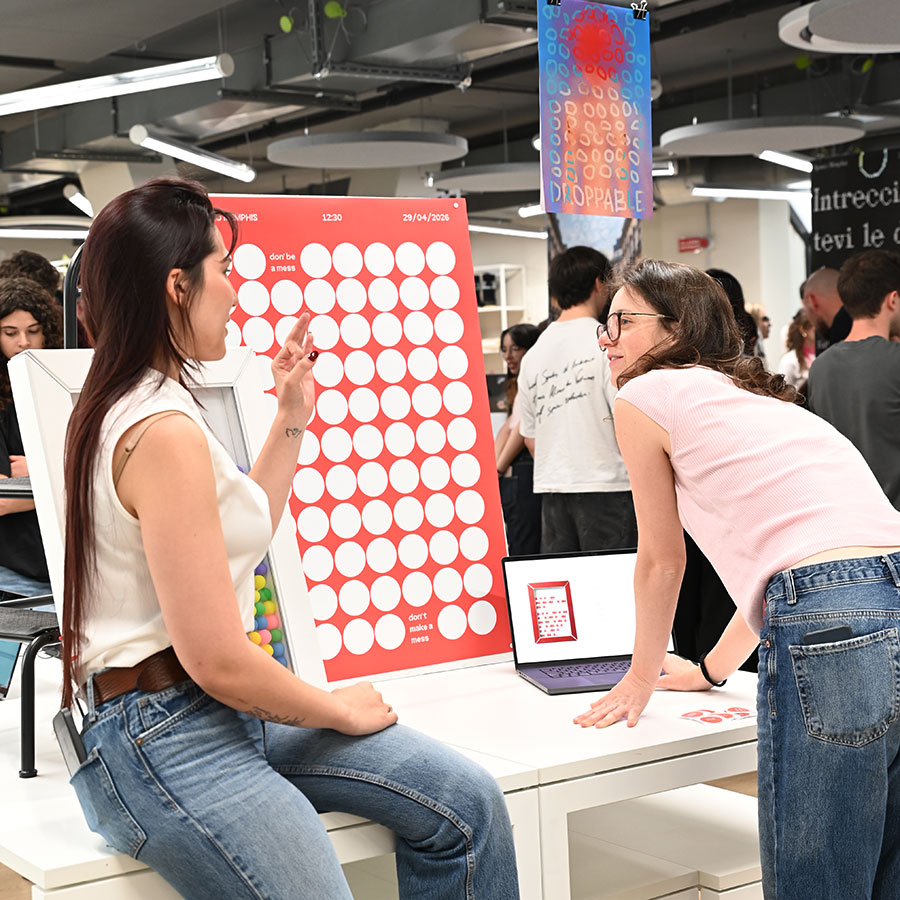
The course always concludes with an exhibition of the projects: groups have the opportunity to present their work through physical or app prototypes, landing pages, stickers, t-shirts, packaging, and various communication materials.
This year, as mentioned, even a bottle of Montenegro, in the right context, proved to be a project touchpoint.
The most interesting thing about the final exhibition isn't the output itself. It’s the leap.
Students who five months earlier didn't know where to start are, by the end, able to present a project, defend their choices, build a prototype, explain the relationship between object and interface, and bring people into their world.
Not everything is perfect, of course... and thankfully so!
Our experience as teachers has taught us that in school, there is no need to pretend that everything is final. Instead, it is necessary to build a space where things can be tested, failed at, adjusted, and re-examined.
Perfection is often much less interesting than evolution.
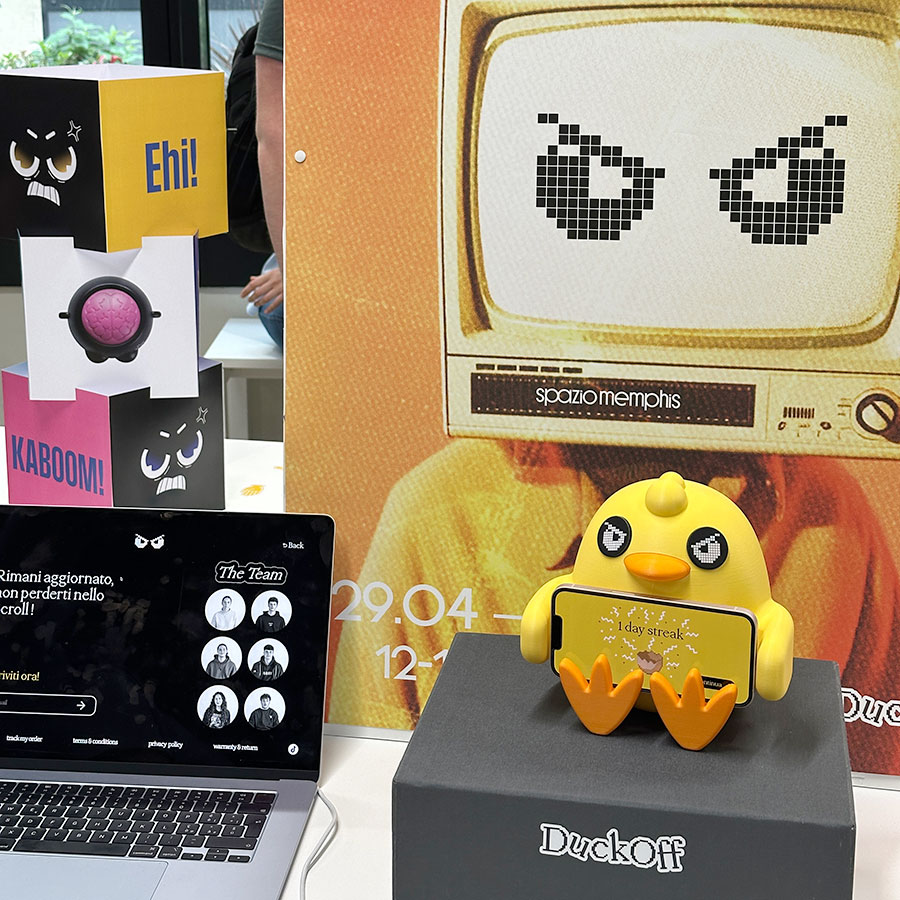
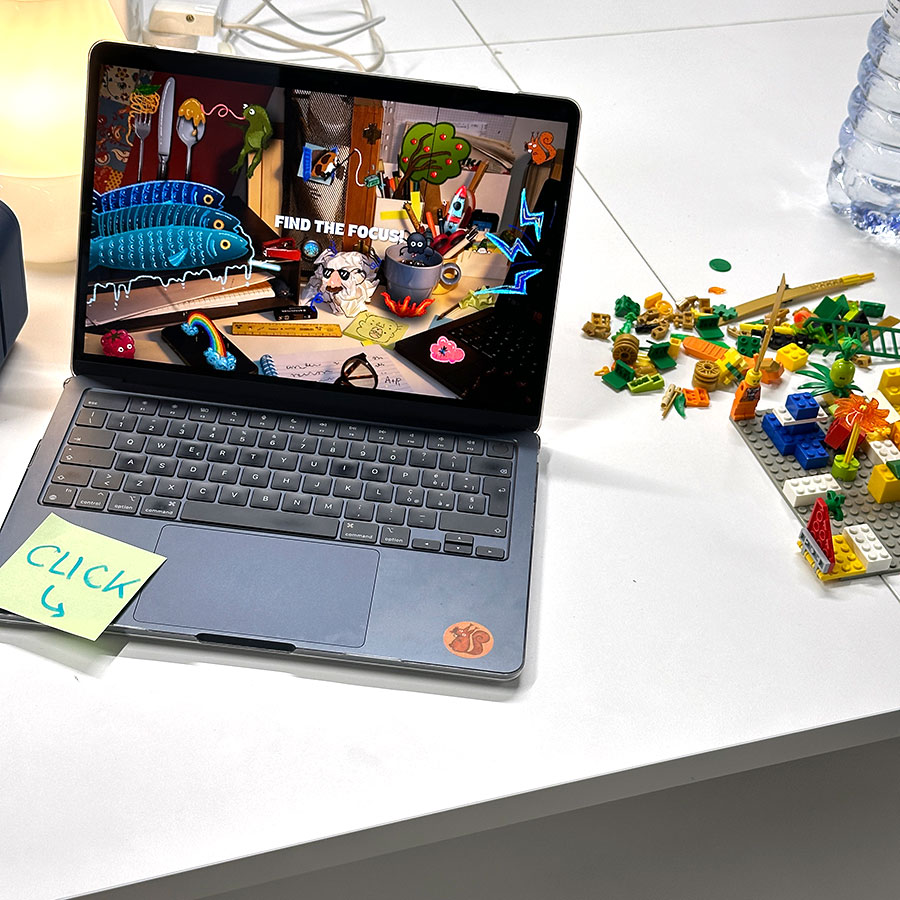
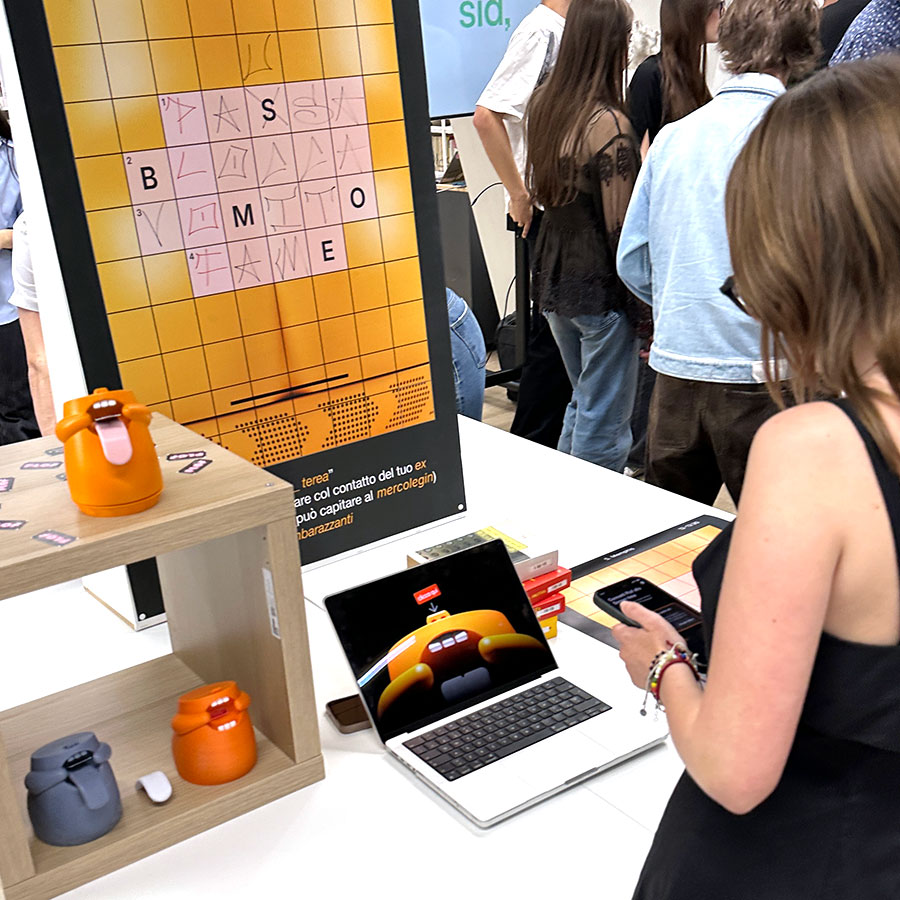
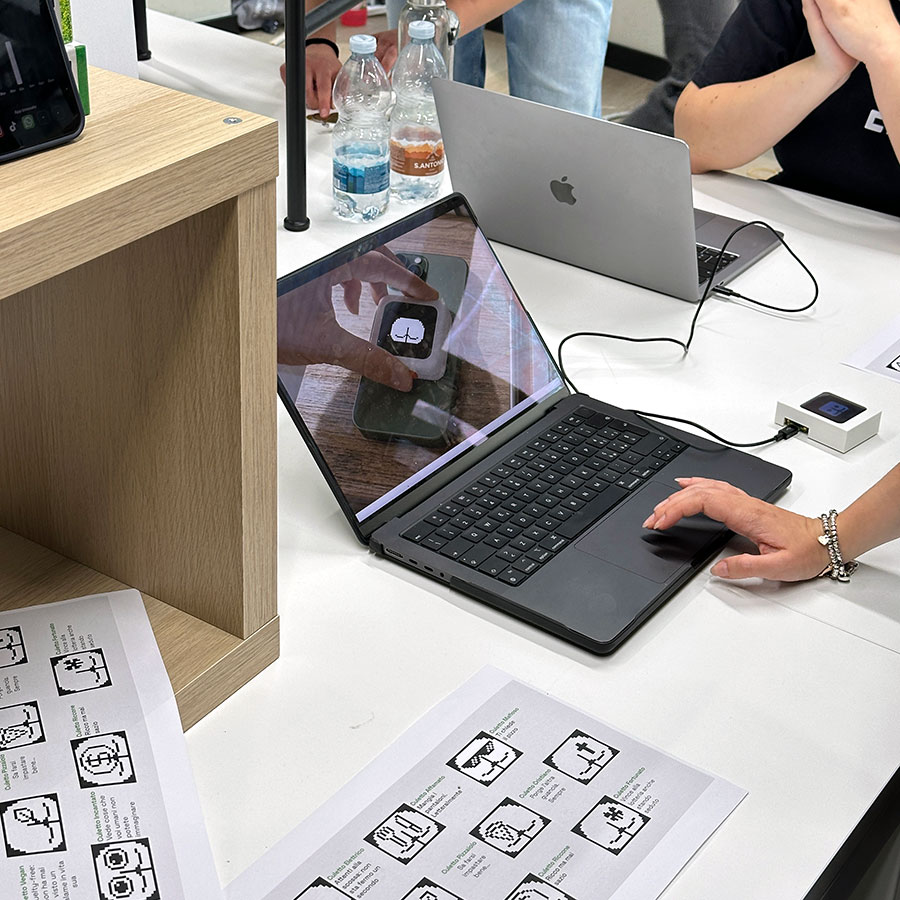
This year, at the final exhibition, we also had a special guest: Lorenzo Grosso, aka TheRabbix.
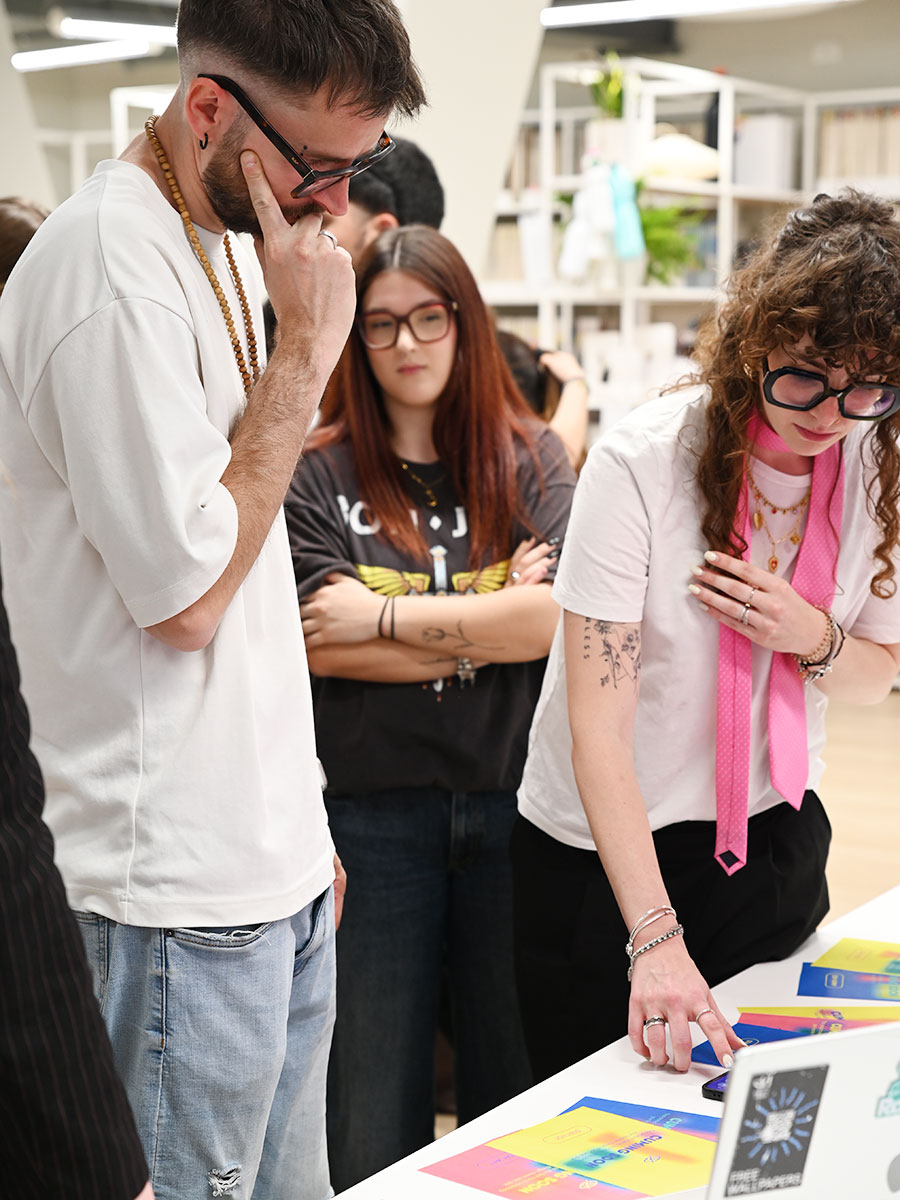
His presence was a valuable opportunity to add an external perspective to the journey: Lorenzo was able to observe the projects, comment on them, and discuss them, bringing different questions, references, and points of view.
This is also part of the project: stepping out of your own design bubble and engaging with those who look at it from the outside without knowing all the hours, discussions, and reasoning behind it.
What comes across? What works? What isn't understood? And above all: what can be pushed a little further?
These are questions that are good for those studying design, but, come to think of it, also for those who do it for a living.
After the exhibition, we interviewed Lorenzo as part of our SID Talks, in front of all the students. The interview became the second episode of our podcast “Tutta Colpa di Bruno” (available on Spotify and YouTube).
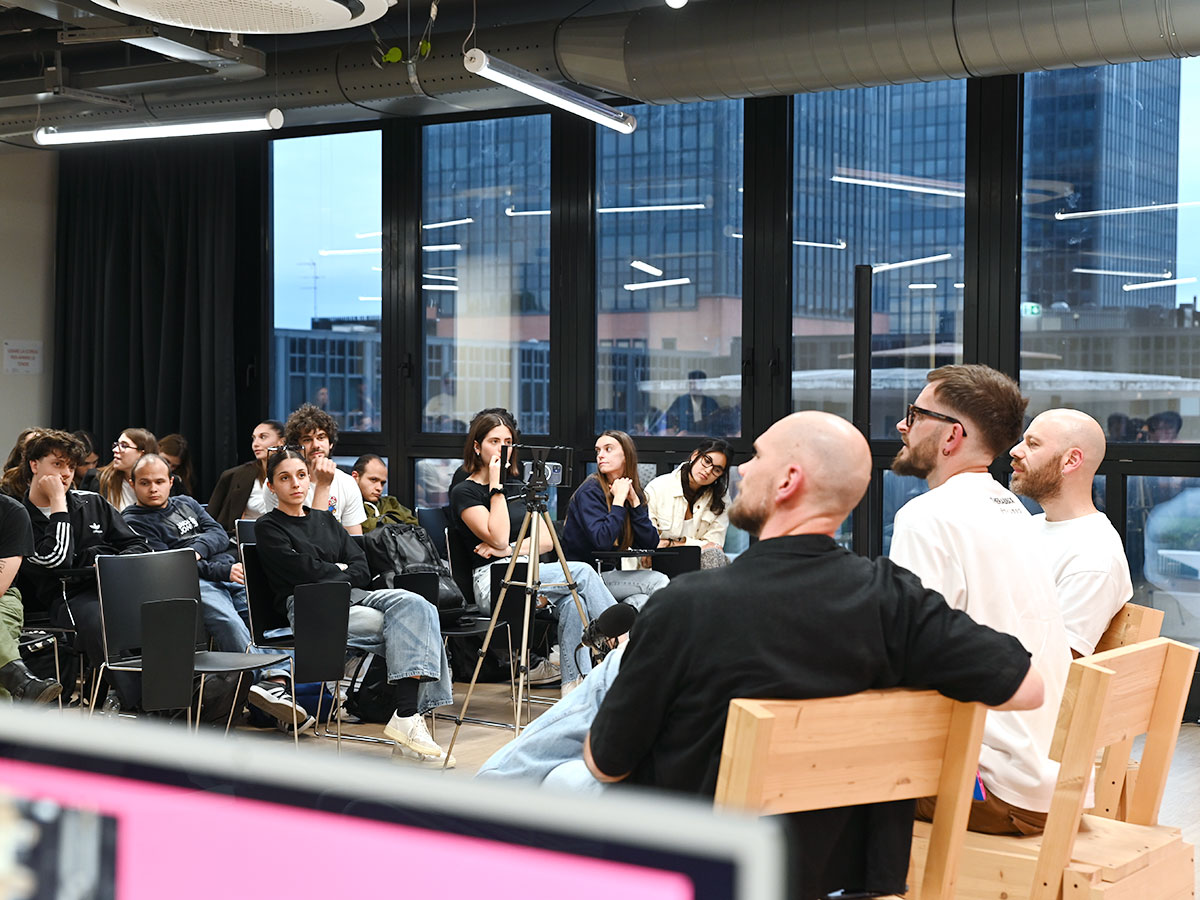
We would like to take this opportunity to thank Lorenzo once again for his time, his attention, and the exchange.
A huge thank you to all the Sidders as well, truly.
The moral of the story: a brief doesn't necessarily have to tell you where to end up; sometimes it’s enough for it to give you a good reason to start.
Continue reading our blogs